

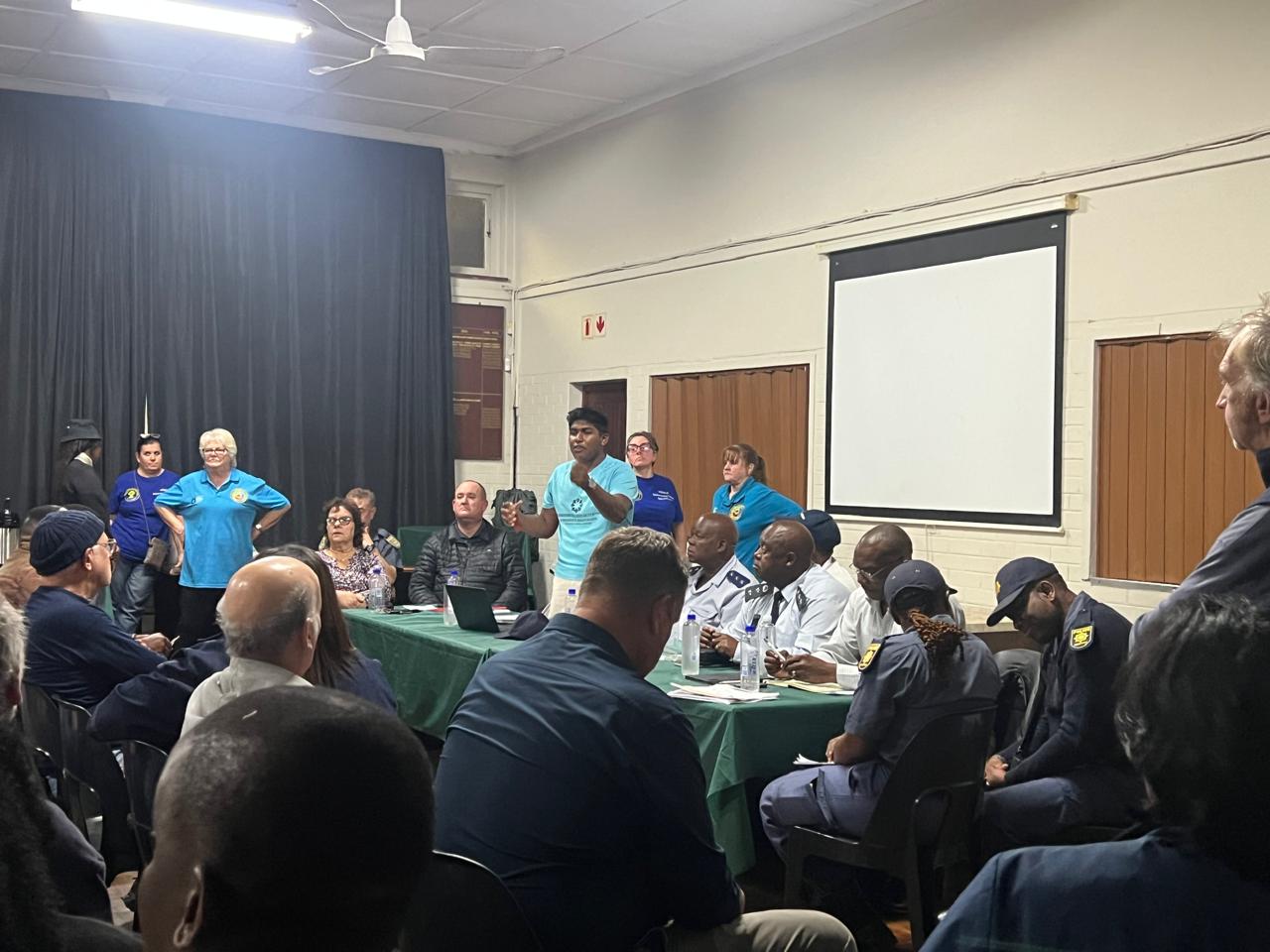
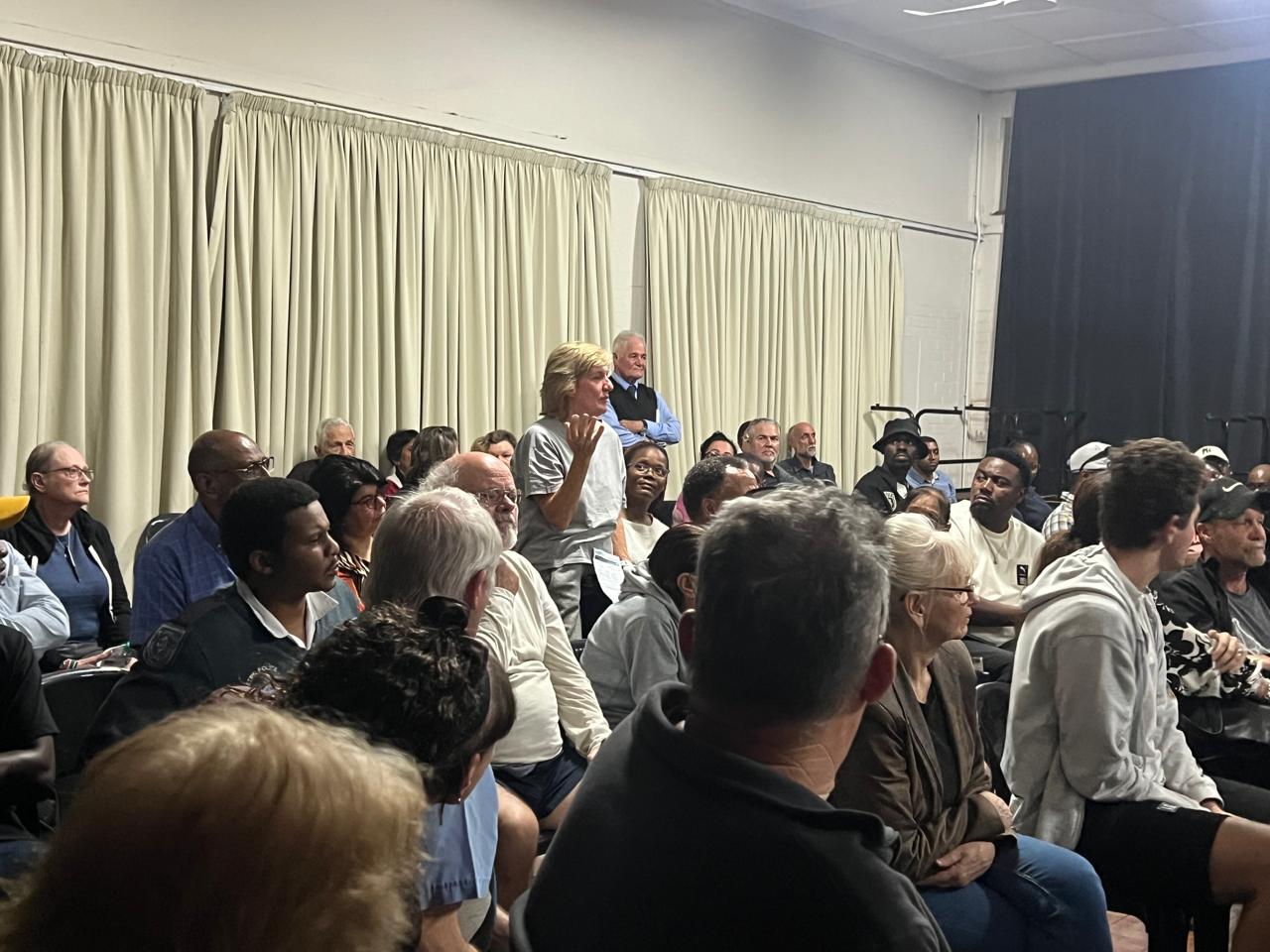
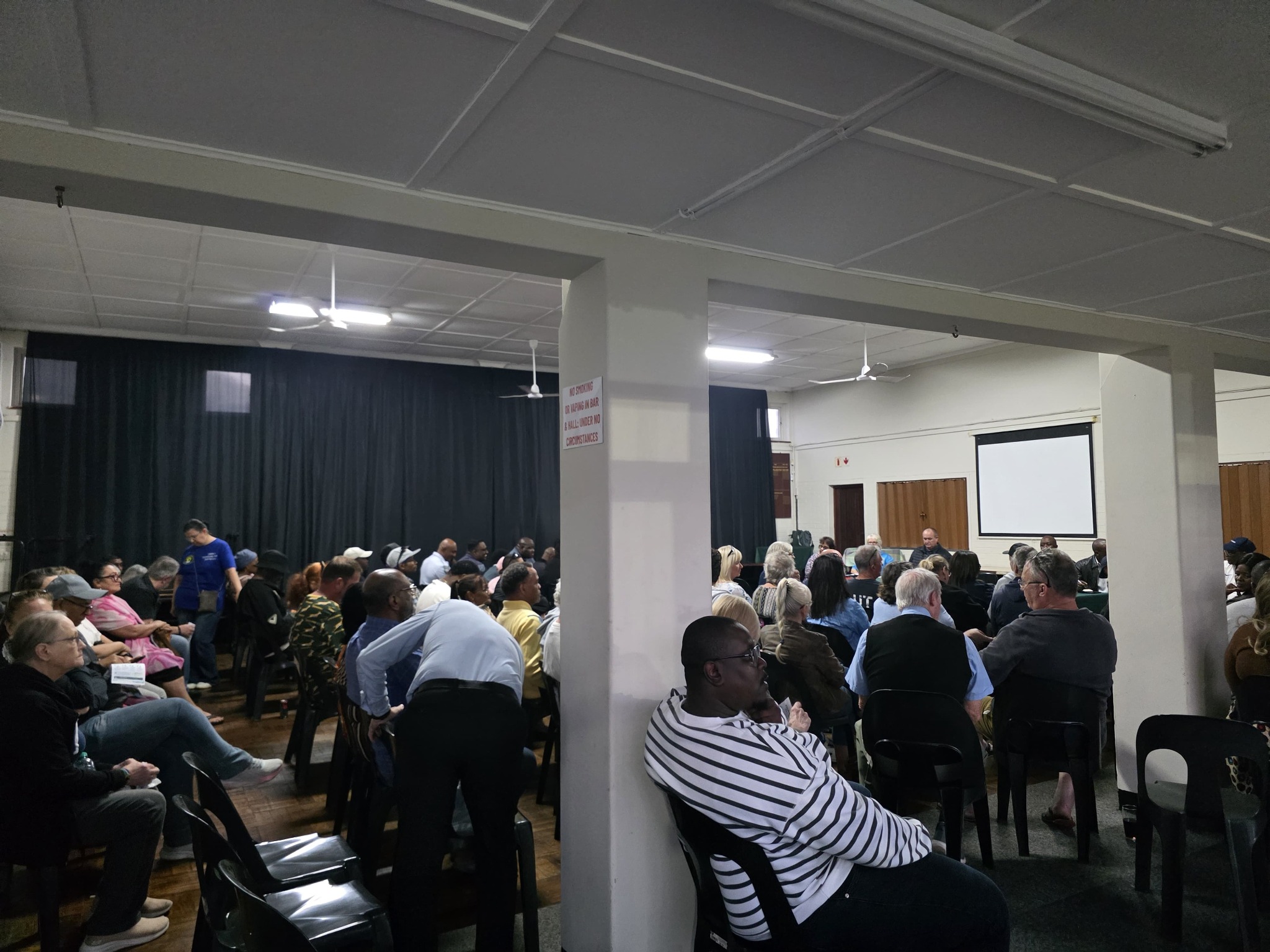
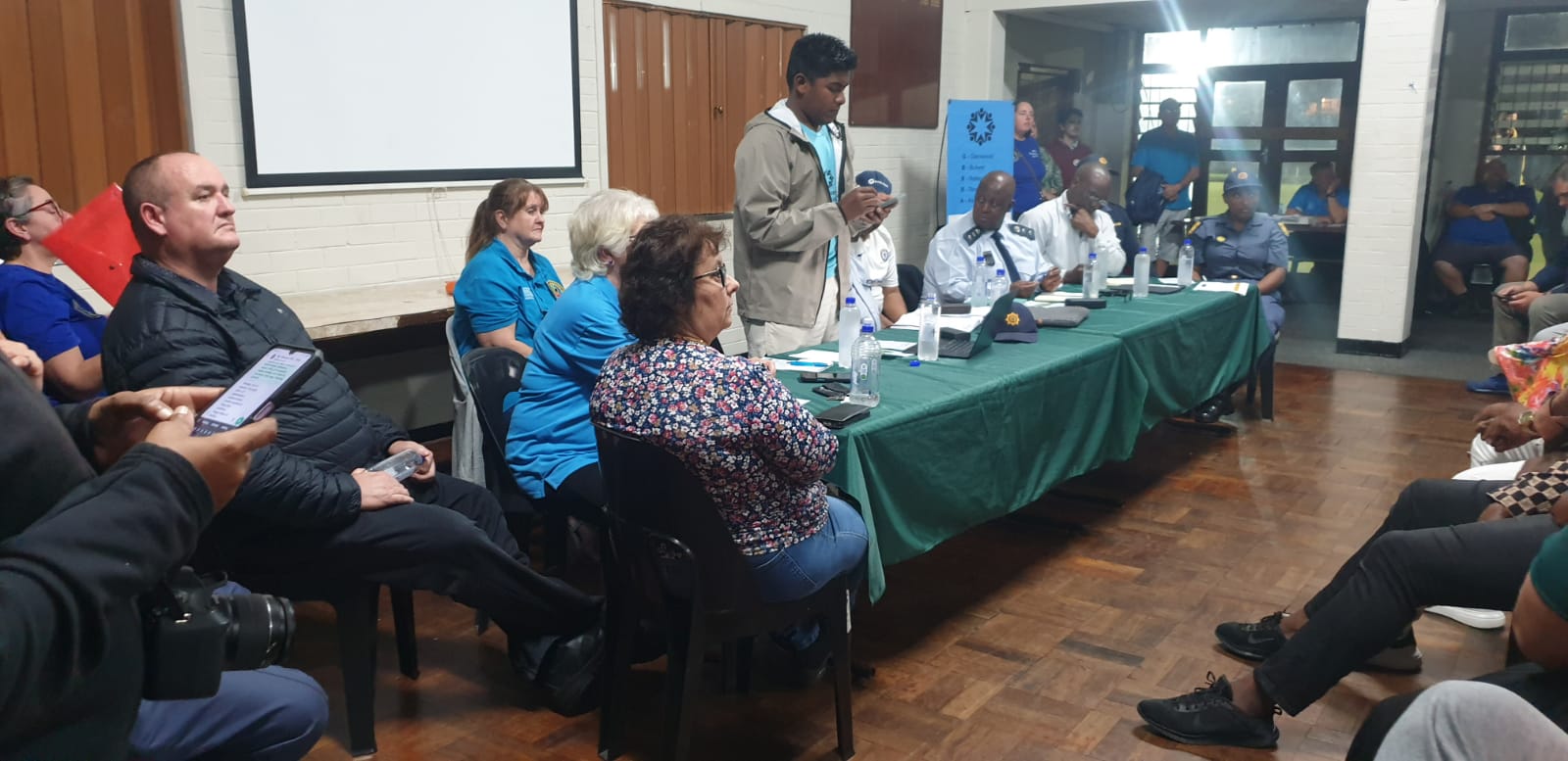
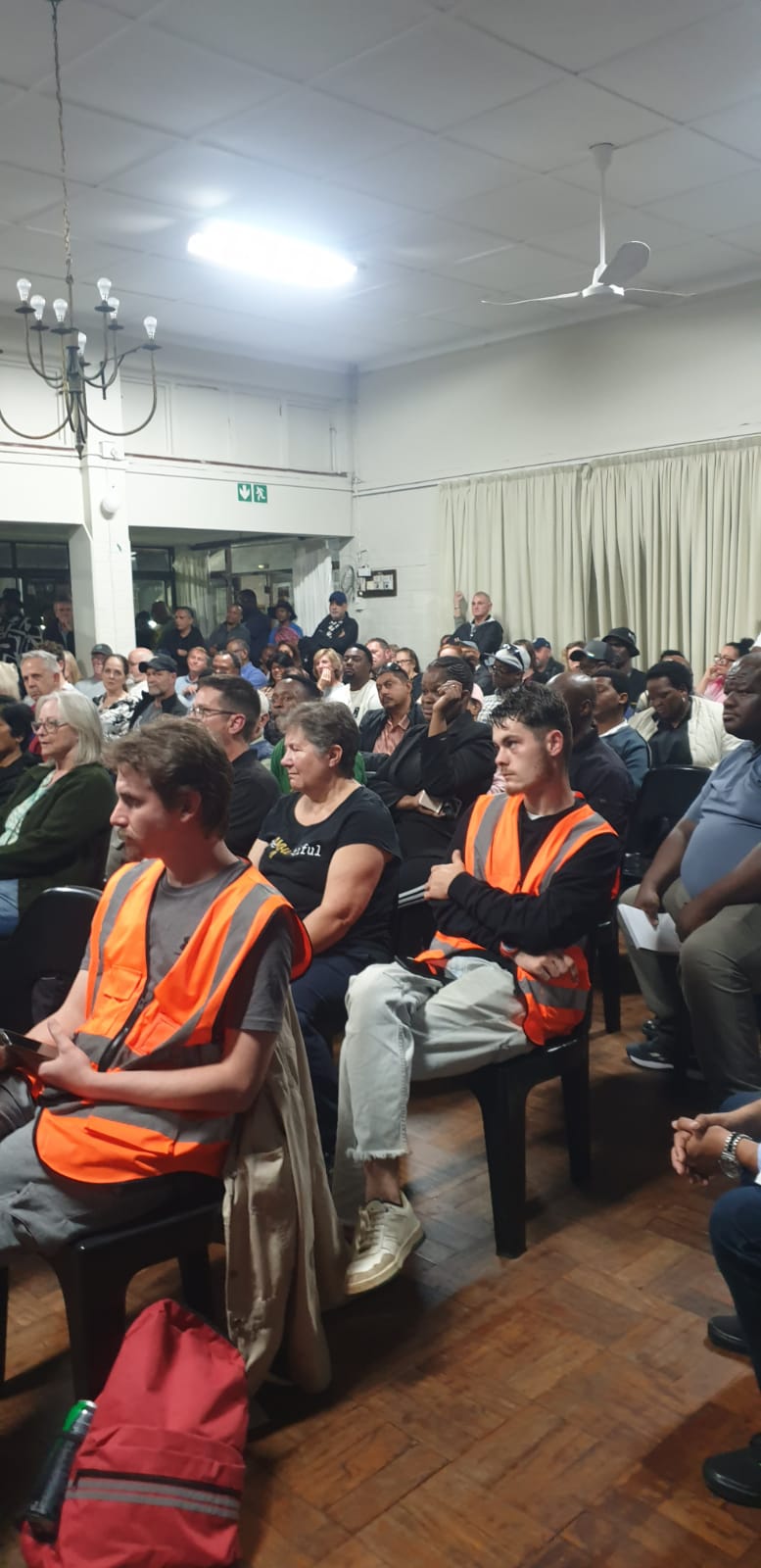
The Glenwood/Bulwer Ratepayers & Residents Association would like to thank everyone who attended Tuesday evening's Davenport community meeting — and particularly residents for bearing with us as the programme ran to approximately one hour and twenty minutes. There was a great deal to cover, and the strong turnout reflected how important the issue has become to the wider community.
More than 200 residents, business owners and stakeholders attended, together with Umbilo SAPS, eThekwini Metro Police and Ward 33 Councillor Fran Kristopher. The scale of the turnout gave the meeting a different character from previous engagements: the concern is real, but so too is the willingness from different groups to find a workable solution.
The meeting was intentionally solutions-focused. The purpose was not to create a divide between residents and businesses, or between students and the surrounding community. Davenport Road is an important commercial and social precinct, but it also sits within a residential neighbourhood. Any long-term answer must therefore work for residents, businesses, students, visitors, SAPS, Metro Police and the municipality.
A serious test comes on 26 September
One of the most immediate matters raised was another large gathering being circulated for 26 September. Metro Police indicated that the event has been noted and that they will be on heightened alert. This will be an important early test of whether the commitments and lessons from the meeting translate into better preparation, communication and visible management on the ground.
GBRRA also intends to convene a follow-up meeting in early October. By then, the aim is to have moved from identifying the problems to testing practical interventions and understanding what is working, what is not, and what still requires escalation.
A major thank you to Metro Police
GBRRA would particularly like to thank eThekwini Metro Police for attending in force, engaging directly and speaking candidly. Residents specifically acknowledged the value of Metro recognising where the response had fallen short. That straight talk matters, because rebuilding confidence starts with acknowledging the problem and then demonstrating improvement.
What residents put on the table
The discussion produced a number of recurring concerns and practical suggestions. These are not presented as final decisions; they are issues and proposals that now need to be examined with the relevant authorities and stakeholders.
Metro resources and enforcement
Residents questioned how Metro Police resources are being deployed and why repeated by-law infringements have continued despite previous complaints and references.
Multiple references, little outcome
Several residents said they hold multiple reference numbers for incidents and by-law complaints, but have seen little or no visible outcome from those reports.
Call centre and communication failures
Dropped calls, unanswered lines and difficulty reaching the correct service were raised as a major problem. If residents cannot reliably report what is happening, enforcement starts with a communication gap.
Illegal building concerns
Residents argued that basic planning and building-control issues cannot be ignored while the area tries to address larger operational and by-law problems.
Problematic conditions on Shooter Road
A Shooter Road resident described illegal parking and public drinking affecting the residential street, including concern that emergency access to the nearby old-age home could be compromised. Temporary access controls over peak weekends were raised as one option worth examining.
“Talk is cheap”
There was frustration that similar meetings have happened before without enough follow-through. The expectation now is measurable action, not another cycle of discussion without implementation.
Ferguson Road: honesty was welcomed
A Ferguson Road resident specifically welcomed Metro's frankness and acknowledgement that the response had not always been good enough. That honesty was seen as a positive starting point.
Students must be part of the solution
Residents stressed the need for student leadership and accommodation stakeholders to be brought into the process. By-law awareness and safety are not only resident concerns; students and visitors also need a precinct that is properly managed.
The Davenport satellite office
Questions were raised about the function and operating hours of the Metro satellite office. It was noted that the office currently operates within Davenport Centre hours, prompting discussion about whether a more suitable operating model or location could provide stronger after-hours coverage.
Somerset Avenue and the source of the problem
Residents argued that enforcement alone is not enough: the underlying causes of the crowds must be understood, including nearby residences, event promotion and social-media activity. The idea of a more responsible student-village model was also raised.
Business responsibility
The meeting recognised that not every business is directly inviting or creating the crowds, but businesses operating in the precinct still have a role in responsible management and in helping identify where the pressure is coming from.
A designated e-hailing area
Heavy Uber and e-hailing activity was raised as a contributor to congestion. One practical suggestion was to investigate a signed drop-off and collection point lower down near Bulwer Park and the substation, similar to designated e-hailing areas used at airports and in other cities.
Noise, open alcohol and visible presence
Noise complaints, drinking in public and the need for a consistent Metro presence came up repeatedly. Residents emphasised that deterrence and visible policing can matter just as much as enforcement after an incident has already escalated.
The missing stakeholders matter
A strong theme was that this cannot be solved by residents and enforcement agencies alone. Student leadership, accommodation providers, responsible businesses and the people who actually use the precinct at night need to be part of the next phase. The safety argument applies to everyone. A poorly managed environment places residents, staff, students, patrons and visitors at risk.
The aim should therefore be a form of responsible precinct management: clear rules, predictable enforcement, safer movement, better communication and a shared understanding of what is expected from everyone operating in or using Davenport Road.
From complaints to evidence: the Davenport Community Monitor
GBRRA also introduced the new Davenport Community Monitor. It has been built precisely because one of the problems raised at the meeting is fragmentation: one resident has a Metro reference, another has a noise complaint, another reports parking, another raises obstruction — but there is no single community view of the pattern.
The Monitor is not a name-and-shame platform. Private reports can record the location, incident type, time, optional evidence and official reference. What appears publicly is reviewed and sanitised trend information only. The purpose is to help establish what is happening, when it is happening, and whether interventions are actually changing the situation over time.
What happens next
26 September
Metro Police has noted the next large gathering being circulated and indicated that it will be on heightened alert.
Between now and early October
Residents and stakeholders can continue recording relevant incidents and references through the Davenport Community Monitor so that the next discussion is supported by structured evidence.
Early October follow-up
GBRRA intends to bring the relevant parties back together to assess progress, outstanding problems and practical interventions.
The turnout on Tuesday showed that the community has reached a point where people are willing to participate. The responsibility now is to make sure that energy becomes sustained, practical work. The objective remains a Davenport Road that is vibrant, commercially successful, safe, well-managed and compatible with the residential neighbourhood around it.